


Vaccinating your puppy is crucial for their health and longevity. This complete guide provides essential timelines and tips to ensure your furry family member stays protected from serious diseases. Learn from experts and make informed decisions for your puppy’s well-being.
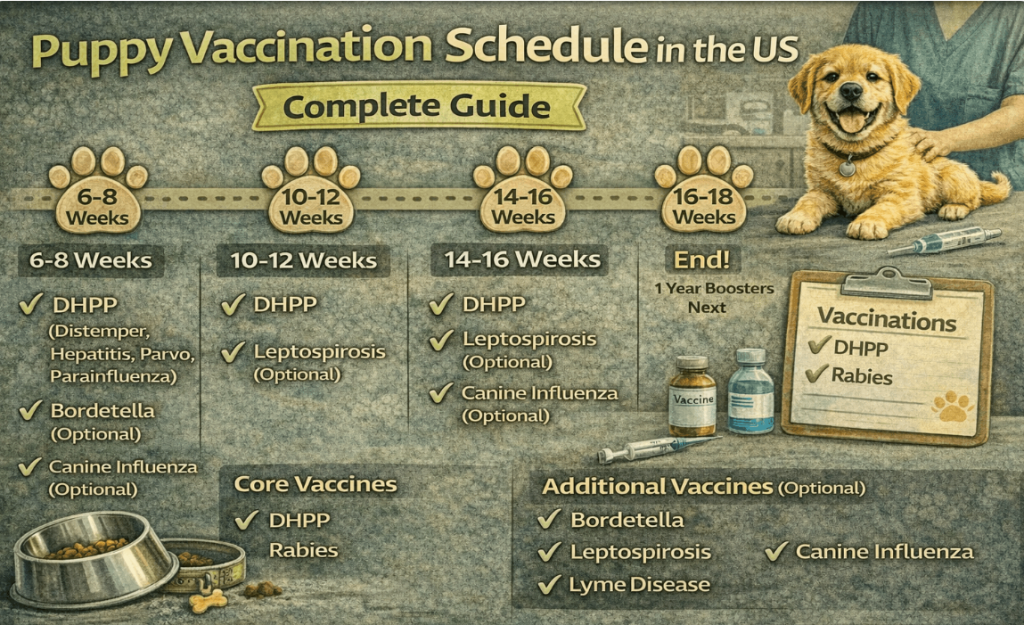
Puppy Vaccination Schedule in the US (Complete Guide)
Vaccinating your puppy is one of the most important things you’ll do as a new pet parent. The puppy vaccination schedule in the US typically starts at 6-8 weeks of age, with core vaccines given every 3-4 weeks until 16 weeks old. This isn’t just about following a timeline—it’s about protecting your furry family member from serious diseases.
I remember the first time I held a tiny Golden Retriever puppy in my arms, feeling that mix of excitement and responsibility. That little ball of fluff depended on me for everything, including protection from diseases I couldn’t even see. Over the years, working with hundreds of breeders and new puppy parents, I’ve seen how proper vaccination makes all the difference in a dog’s health and longevity.
Why Vaccinations Matter For Puppu
Let me tell you something that might surprise you: puppies aren’t born with fully developed immune systems. They rely on antibodies from their mother’s milk for the first few weeks of life. But here’s the catch—those maternal antibodies start fading around 6-8 weeks, leaving puppies vulnerable to serious diseases.
📊 The Reality Check: According to the American Veterinary Medical Association, unvaccinated puppies are 5 times more likely to contract preventable diseases like parvovirus, which has a mortality rate of up to 91% in untreated cases.
Core vs. Non-Core Vaccines
Not all vaccines are created equal. In the US, we categorize them into two groups:
Core Vaccines (Essential for all puppies):
- Canine Parvovirus
- Canine Distemper
- Canine Adenovirus (Hepatitis)
- Rabies
Non-Core Vaccines (Based on lifestyle and risk):
- Bordetella (Kennel Cough)
- Leptospirosis
- Lyme Disease
- Canine Influenza
The Complete Puppy Vaccination Schedule
Here’s the standard timeline most veterinarians follow:
| Age | Vaccines Given | Notes |
|---|---|---|
| 6-8 weeks | DHPP (Distemper, Hepatitis, Parainfluenza, Parvovirus) | First round of core vaccines |
| 10-12 weeks | DHPP booster + Leptospirosis (if needed) | Second round |
| 12-14 weeks | DHPP booster + Rabies (first dose) | Rabies timing varies by state |
| 16 weeks | DHPP final booster + Rabies (if not given earlier) | Full protection achieved |
| 12-16 months | DHPP booster + Rabies booster | Annual or triennial depending on vaccine type |
What to Expect at Each Visit
6-8 Week Visit:
- First DHPP vaccine
- Deworming (usually included)
- Fecal exam for parasites
- General health check
10-12 Week Visit:
- Second DHPP booster
- Possible Leptospirosis vaccine
- Heartworm prevention discussion
- Behavior and training tips
12-14 Week Visit:
- Third DHPP booster
- First Rabies vaccine
- Spay/neuter discussion
- Nutrition counseling
16 Week Visit:
- Final DHPP booster
- Rabies vaccine (if not given earlier)
- Full health assessment
- Microchipping (if desired)
Vaccine Costs and Budgeting
Let’s talk numbers because I know cost is a concern for many new puppy parents. Here’s what you can expect:
| Vaccine | Cost per Dose | Total Cost (Full Series) |
|---|---|---|
| DHPP | $20-$40 | $80-$160 |
| Rabies | $15-$25 | $15-$25 |
| Leptospirosis | $25-$35 | $50-$70 |
| Bordetella | $20-$30 | $20-$30 |
| Lyme | $30-$40 | $60-$80 |
💰 Budget Tip: Many veterinary clinics offer puppy wellness packages that bundle vaccines, exams, and other services at a discount. These typically range from $150-$300 for the full series.
Common Vaccination Myths Debunked
Myth 1: “My puppy doesn’t need vaccines if they stay indoors.”
Reality: Many diseases can be brought into your home on shoes, clothing, or other pets. Parvovirus, for example, can survive on surfaces for months.
Myth 2: “Natural immunity is better than vaccines.”
Reality: While maternal antibodies are important, they don’t provide long-term protection. Vaccines stimulate the puppy’s own immune system to create lasting immunity.
Myth 3: “Vaccines cause more harm than good.”
Reality: Serious vaccine reactions are extremely rare (less than 1 in 10,000). The risks of preventable diseases are far greater.
When to Avoid Vaccinations
There are a few situations where you might need to delay or modify the vaccination schedule:
- If your puppy is currently sick or has a fever
- If they’ve had a previous severe vaccine reaction
- If they’re on certain medications that suppress the immune system
- If they’ve recently had surgery
Always consult your veterinarian if you’re unsure about timing.
The Importance of Booster Shots
Here’s something many new puppy parents don’t realize: that initial series of vaccines isn’t enough for lifelong protection. Booster shots are crucial because:
- They reinforce the immune response
- They account for any gaps in initial protection
- They maintain immunity as your dog ages
Most core vaccines require boosters every 1-3 years, depending on the specific vaccine and your dog’s risk factors.
Traveling with Your Puppy
If you’re planning to travel with your new puppy, you’ll need to consider:
- Airlines: Most require proof of rabies vaccination and a health certificate
- State Laws: Rabies vaccine requirements vary by state
- International Travel: Some countries have strict import regulations
- Boarding Facilities: Often require Bordetella and other non-core vaccines
✈️ Travel Tip: Always check requirements at least 4-6 weeks before travel to ensure your puppy has time to complete any necessary vaccine series.
What If You Miss a Vaccine?
Life happens. If you miss a scheduled vaccine, here’s what to do:
- Don’t panic – Your puppy isn’t automatically at risk
- Call your vet – They’ll advise whether to continue the series or start over
- Avoid high-risk areas – Until your puppy is fully vaccinated, steer clear of dog parks, pet stores, and other areas with unknown dogs
In most cases, you can simply pick up where you left off without starting the entire series over.
Finding a Reputable Veterinarian
Choosing the right vet is just as important as following the vaccination schedule. Here’s what to look for:
- AAHA Accreditation: The American Animal Hospital Association sets high standards
- Positive Reviews: Check Google, Yelp, and Facebook for client experiences
- Emergency Care: Do they offer after-hours services or have partnerships with emergency clinics?
- Communication Style: Do they take time to answer your questions?
- Facility Cleanliness: A well-maintained clinic is a good sign
Puppy Vaccination Schedule: Quick Reference Guide
For easy reference, here’s a simplified version of the schedule:
- 6-8 weeks: First DHPP vaccine
- 10-12 weeks: Second DHPP + possible Lepto
- 12-14 weeks: Third DHPP + Rabies
- 16 weeks: Final DHPP + Rabies (if needed)
- 12-16 months: Boosters for all core vaccines
FAQ: Puppy Vaccination Schedule
How much does the full puppy vaccination series cost?
The complete puppy vaccination series typically costs $150-$300, depending on your location and whether you choose additional non-core vaccines. This usually includes 3-4 DHPP boosters, rabies vaccine, and a basic health exam at each visit.
Can I vaccinate my puppy myself?
While it’s technically possible to purchase vaccines and administer them yourself, I strongly advise against it. Veterinarians not only give the vaccines but also perform crucial health checks at each visit. They can spot early signs of health issues that might be missed otherwise.
What happens if my puppy has a reaction to a vaccine?
Mild reactions like lethargy or slight fever are normal and usually resolve within 24-48 hours. Severe reactions (vomiting, facial swelling, difficulty breathing) are extremely rare but require immediate veterinary attention. Always monitor your puppy for a few hours after vaccination.
Are there any side effects to puppy vaccines?
Most puppies experience no side effects beyond mild soreness at the injection site. Some may be slightly lethargic or have reduced appetite for a day or two. These are normal signs that the immune system is responding to the vaccine.
How long after vaccination can my puppy go outside?
This is a common question with a nuanced answer. While your puppy can technically go outside immediately after vaccination, they’re not fully protected until 1-2 weeks after the final booster (around 16-18 weeks old). Until then, avoid areas with unknown dogs.
Can my puppy get sick even if vaccinated?
No vaccine is 100% effective, but properly vaccinated puppies have a much lower risk of contracting serious diseases. If they do get sick, vaccinated puppies typically have milder symptoms and better recovery rates.
What’s the difference between modified live and killed vaccines?
Modified live vaccines contain weakened versions of the virus that stimulate a strong immune response. Killed vaccines contain inactivated viruses. Most core puppy vaccines are modified live, as they provide longer-lasting immunity with fewer doses.
Should I get my puppy the Leptospirosis vaccine?
This depends on your location and lifestyle. Leptospirosis is more common in rural areas, near standing water, or if your dog will be around wildlife. It’s also zoonotic (can infect humans), so many vets recommend it for most puppies.
How often will my adult dog need vaccines?
After the puppy series, most dogs need DHPP boosters every 1-3 years and rabies boosters every 1-3 years (depending on state laws and vaccine type). Your vet will create a customized schedule based on your dog’s risk factors.
What records should I keep for my puppy’s vaccines?
Always keep a copy of your puppy’s vaccination records. You’ll need them for boarding, grooming, doggy daycare, and travel. Most vets provide a vaccination card or can give you digital copies for easy access.
📚 Related Articles
- Puppy health checklist
- Must know – Safe Puppy Buying Guide
- 🛡️ Avoid Puppy Scams When Buying Online
Final Thoughts about Vaccinating Dogs
Following the proper puppy vaccination schedule is one of the best ways to ensure your new furry friend grows into a healthy, happy adult dog. While it might seem overwhelming at first, remember that each vaccine is protecting your puppy from serious, potentially life-threatening diseases.
The investment you make in your puppy’s health now will pay dividends throughout their life. And don’t forget—those vet visits are also great opportunities to ask questions, get training tips, and build a relationship with your veterinary team.
Ready to find your perfect puppy? Browse verified breeders across the US who prioritize health and proper vaccination protocols.