


Training a puppy is all about understanding their needs and creating a consistent routine. Learn essential tips and techniques to build a strong foundation for your new furry friend.
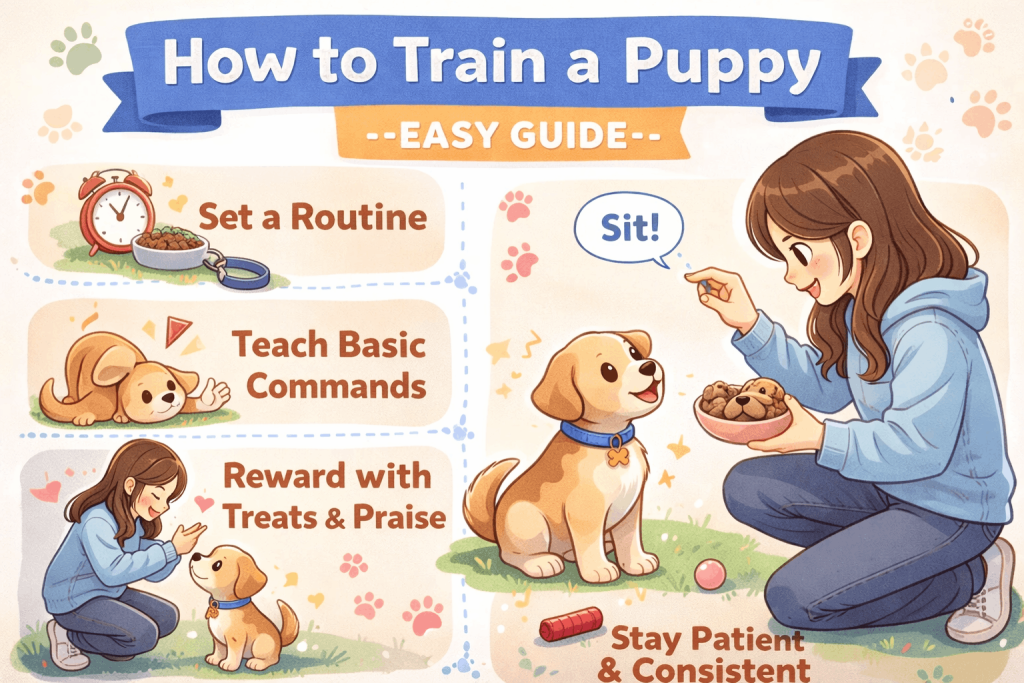
How to Train a Puppy: Step-by-Step Guide for New Dog Owners in the US
Training a puppy doesn’t require dominance, punishment, or expensive tools.
It requires clear communication, consistency, and realistic expectations.
If you’re a new dog owner in the United States asking:
- “How do I train my puppy at home?”
- “What’s the best puppy training schedule?”
- “How long does puppy training take?”
This guide gives you everything you need to know, written specifically for US dog owners.
Training a puppy starts with understanding their needs and creating a consistent routine. Honestly, it’s not about being perfect—it’s about being present. I’ve seen firsthand how a few simple techniques can transform that adorable chaos into a well-mannered companion.
Let me tell you something: puppies don’t come pre-programmed. That little ball of fluff is a blank slate, ready to learn from you. And guess what? You’re going to make mistakes. Everyone does. The key is starting with the right foundation.
Puppy Training Basics Every US Dog Owner Should Know
Before we dive into commands and schedules, let’s talk about what really matters:
💡 Real Talk: Your puppy’s first 16 weeks are the golden window for learning. Miss this, and you’re playing catch-up.
Here’s what I’ve learned from working with hundreds of new puppy owners:
- Patience isn’t optional – It’s required
- Consistency beats intensity – 5 minutes daily > 1 hour weekly
- Your energy sets the tone – Calm owner = calm puppy
- Mistakes are part of the process – For both of you
Essential Puppy Training Supplies (US Recommendations)
Let’s start with what you’ll actually need:
| Item | Purpose | Cost Range |
|---|---|---|
| High-value treats | Motivation for training | $5-$15 |
| 6-foot leash | Control during lessons | $10-$25 |
| Clicker | Precise timing for rewards | $5-$10 |
| Crate | Safe space + house training | $30-$100 |
| Puzzle toys | Mental stimulation | $10-$25 |
| Puppy pads | Indoor potty training | $10-$20 |
Pro Tip: Skip the cheap treats. Your puppy will work harder for real meat (boiled chicken, hot dogs) than kibble.
The 5 Golden Rules of Puppy Training
1. How to Teach Your Puppy Their Name (Fast Method)
⏱️ Time Required: 2-3 days
📋 What You’ll Need: Treats, clicker (optional)
Step 1: Say your puppy’s name in a happy voice
Step 2: The second they look at you, mark it (“Yes!” or click) and reward
Step 3: Repeat 10-15 times per session, 3-5 sessions daily
Common Mistake: Saying the name repeatedly when they ignore you. Instead, wait for them to glance your way, then reward immediately.
2. How to Teach a Puppy to Sit (Beginner Method)
This is your foundation for all other training.
🎯 Why It Matters: Teaches impulse control and creates a default “good behavior” position
Step 1: Hold a treat at your puppy’s nose level
Step 2: Slowly move it up and back over their head
Step 3: The second their butt hits the ground, mark and reward
Training Timeline:
- Day 1-3: Lure with treat
- Day 4-7: Add verbal cue “Sit”
- Week 2: Phase out treat lure (hand signal only)
- Week 3: Add duration (3-5 seconds before reward)
3. Crate Training a Puppy the Right Way (US Humane Method)
n the US, crate training is widely recommended by vets and trainers. Let’s be real—no one loves the crate at first. But done properly, it becomes their safe space.
The 3-Phase Approach:
- Introduction (Days 1-3):
- Leave crate door open
- Toss treats inside
- Feed meals near crate
- Short Sessions (Days 4-7):
- Close door for 5-10 minutes while you’re home
- Gradually increase to 30 minutes
- Never use crate as punishment
- Overnight Success (Week 2+):
- Place crate in your bedroom
- Take puppy out right before bedtime
- Expect 1-2 nighttime potty breaks initially
📊 Crate Training Stats:
- 85% of puppies adjust within 2 weeks
- Average overnight success: 4-6 weeks
- Key factor: Never let them cry it out for more than 10 minutes
Important: Never use the crate as punishment.
4. How to Potty Train a Puppy in the US without Stress (Daily Schedule)
Here’s the system that works 90% of the time:
The 3-2-1 Rule:
- Take puppy out 3 minutes after eating
- 2 minutes after drinking
- 1 minute after waking from naps
Schedule for 8-Week-Old Puppy:
- 6:00 AM: Wake up + potty
- 6:30 AM: Breakfast
- 6:35 AM: Potty
- 8:00 AM: Potty
- 10:00 AM: Potty
- 12:00 PM: Lunch + potty
- 2:00 PM: Potty
- 4:00 PM: Potty
- 6:00 PM: Dinner + potty
- 8:00 PM: Potty
- 10:00 PM: Final potty before bed
💡 Pro Tip: Use a consistent phrase like “Go potty” when they’re doing their business. They’ll learn to associate it with the action.
5. How to Leash Train a Puppy and Stop Pulling
Most puppies pull because they’ve learned it gets them where they want to go. Here’s how to fix it:
The Stop-and-Go Method:
- The second the leash tightens, stop walking
- Stand still until leash loosens
- Immediately praise and continue walking
- Repeat consistently
Equipment That Actually Helps:
- Front-clip harness (like the Freedom No-Pull)
- 4-6 foot leash (no retractables!)
- Treat pouch for quick rewards
Avoid retractable leashes during training.
Common Puppy Training Mistakes (US Owners Make)
Let’s talk about what NOT to do:
❌ Inconsistent commands – “Sit,” “Sit down,” “Park it” confuse your pup
❌ Punishing accidents – They won’t understand why you’re mad
❌ Long training sessions – 5-10 minutes max for puppies
❌ Free feeding – Scheduled meals = predictable potty times
❌ Ignoring bad behavior – What you permit, you promote
When to Hire a Professional Puppy Trainer in the US
Some situations need expert help:
- Aggressive behavior (growling, snapping)
- Extreme fear or anxiety
- No progress after 4 weeks of consistent training
- Destructive behavior that’s dangerous
📋 Cost of Professional Training:
- Group classes: $100-$300 for 6-week course
- Private lessons: $50-$150 per hour
- Board-and-train: $1,500-$3,000 for 2-4 weeks
Puppy Training Timeline
Jan 07Jan 14Jan 21Jan 28Feb 04Feb 11Feb 18Feb 25Mar 03Mar 10Mar 17Mar 24Mar 31Apr 07Apr 14Apr 21Apr 28Name RecognitionCrate TrainingPotty TrainingSit CommandLeash WalkingStay CommandLeave ItComplex CommandsOff-Leash ReliabilityBasic SkillsIntermediateAdvancedPuppy Training Milestones
FAQ: Puppy Training Questions Answered
How long does it take to train a puppy?
Most puppies learn basic commands in 4-6 weeks with daily 5-10 minute sessions. However, full reliability typically develops by 18-24 months as they mature. Consistency is more important than duration—short, frequent sessions work best.
What’s the best age to start training a puppy?
Start the day you bring them home! Puppies as young as 8 weeks can begin learning name recognition and basic commands. The critical socialization window is 8-16 weeks, so don’t wait.
How many times a day should I train my puppy?
Aim for 3-5 short sessions daily (5-10 minutes each). Puppies have short attention spans, so frequent, positive interactions work better than long sessions. Always end on a success!
What treats work best for puppy training?
High-value, soft treats work best. Try boiled chicken, cheese cubes, or commercial training treats. The treat should be small (pea-sized) and something your puppy loves but doesn’t get regularly.
How do I stop my puppy from biting?
Redirect biting to appropriate chew toys. When they bite you, say “Ouch!” in a high-pitched voice (like another puppy would), then immediately offer a toy. Consistency is key—every family member must respond the same way.
Should I use a clicker for puppy training?
Clickers provide precise timing for marking good behavior, but they’re not mandatory. You can use a verbal marker like “Yes!” instead. The key is consistency in your timing and rewards.
How long can a puppy hold their bladder?
General rule: 1 hour per month of age (up to 8 hours max). So an 8-week-old puppy can hold it about 2 hours, a 12-week-old about 3 hours. Overnight is different—most puppies need a potty break every 4-6 hours initially.
What’s the hardest part of puppy training?
Most owners struggle with consistency. It’s easy to be strict one day and lenient the next. Puppies thrive on predictable routines and clear expectations from everyone in the household.
Can I train my puppy myself or should I hire a trainer?
Most puppies can be trained by their owners with proper guidance. However, if you’re struggling with specific issues (aggression, extreme fear) or want advanced training, a professional can help. Group classes are great for socialization.
How do I socialize my puppy safely?
Start with controlled environments. Introduce your puppy to:
- Different people (various ages, appearances)
- Other vaccinated dogs
- Various surfaces and sounds
- Car rides and new locations
Always prioritize positive experiences and go at your puppy’s pace.
📚 Related Articles
Final Puppy Training Advice for US Dog Owners
Training a puppy isn’t about perfection, it’s about progress. Some days will feel like two steps forward, one step back. That’s normal.
Remember: Every interaction is a training opportunity. Whether you’re feeding, playing, or just hanging out, you’re teaching your puppy how to exist in your world.
The bond you build during these early months will last a lifetime. Enjoy the journey, celebrate the small wins, and don’t forget to take pictures—your puppy won’t be little for long.
Ready to find your perfect puppy? Browse puppies for sale and start your training journey today!
Still deciding on a breed? Take our Breed Matchmaker Quiz to find your ideal companion.
Need breed-specific training tips? Explore our Breed Guides for tailored advice.